

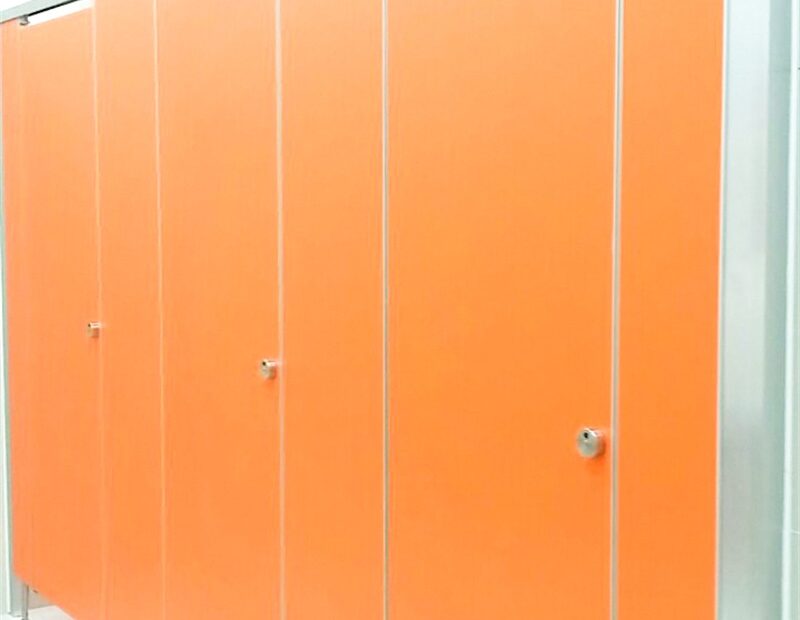
Discover the Benefits of Phenolic Toilet Partitions
Phenolic toilet partitions provide many benefits to businesses, homeowners and public spaces. With their strong and durable construction, phenolic partitions provide a safe, hygienic, and aesthetic solution for commercial and public restrooms.
What is Phenolic?
Phenolic is a material made from many layers of different materials,such as wood or fabric, which are compacted together under high pressure and heat. It is the most common material used to make toilet partitions because of its durability and cost-effectiveness.
Benefits of Phenolic Toilet Partitions:
- Strength and Durability:
Phenolic partitions are extremely strong, making them less vulnerable to damage caused by vandalism or accidental impacts. - Fire Resistance:
Phenolic partitions also have excellent fire resistance and do not require additional fire-proofing. - Waterproof:
Phenolic panels are water-resistant and won’t warp or swell when exposed to water and other liquids. - Easy to Clean:
Phenolic is non-porous and resists the growth of bacteria, making it easy to maintain and keep clean. - Cost-Effective:
Phenolic toilet partitions are highly cost-effective because they are relatively inexpensive to purchase and easy to install.
Conclusion
Phenolic toilet partitions are an ideal and economical choice for businesses and public spaces, offering many advantages such as strength and durability, fire-resistance, waterproof, easy to clean and cost-effectiveness. They are sure to provide you with long-term satisfaction that you can depend on.
What materials are used in phenolic toilet partitions?
Phenolic toilet partitions, also known as phenolic core toilet partitions, are typically made from layers of kraft paper and resin, compressed under heat and pressure. The kraft paper layer is often impregnated with phenolic resin, which offers robust strength and structural integrity. The resin may also contain other phenolic resins, or synthetic resins or melamine. The surface of the partition may also feature a high pressure laminate, such as HPL, vinyl, or TFL (through-color-laminate).
What are the benefits of using phenolic toilet partitions?
1. Durability: Phenolic toilet partitions are highly durable and resistant to damage. They will not rot, corrode, or rust and can withstand a great deal of wear and tear.
2. Easy to Clean: The non-porous surface of phenolic toilet partitions make them easy to clean and maintain. They can be wiped down and disinfected easily, and grime and dirt don’t accumulate as easily as on other materials.
3. Low Cost: Phenolic toilet partitions are generally less expensive than other materials such as stainless steel.
4. Attractive: Phenolic toilet partitions come in a wide range of colors and finishes that can help to create an attractive bathroom environment.
5. Safe and Hygienic: The non-porous surface of phenolic toilet partitions prevents bacteria from accumulating, helping to promote a hygienic environment. In addition, phenolic toilet partitions are fire-resistant, helping to provide added safety in the event of a fire.
What are the advantages of phenolic toilet partition over traditional materials?
1. Phenolic toilet partitions are more durable than traditional materials. They are resistant to everyday wear and tear, and can be easily wiped clean.
2. They are fire-resistant, reducing the risk of fire in the bathroom area.
3. Phenolic toilet partitions are moisture-resistant, preventing any water damage or mould growth.
4. They are easy to maintain, providing the benefit of keeping your bathroom area looking clean and neat for years to come.
5. They are more economical than traditional materials, helping to reduce costs in the long run.
6. Phenolic toilet partitions are available with a range of colours and designs, making it easy to find a stylish look that suits your bathroom décor.
What are the disadvantages of phenolic toilet partition compared to traditional materials?
1. Phenolic toilet partitions are more expensive than traditional materials, such as plastic laminate or wood veneer.
2. Phenolic materials are more difficult to repair or replace if damaged.
3. The material is more susceptible to scratching and scuffing, making it more challenging to keep looking neat and clean.
4. Phenolic materials do not provide a good sound barrier compared to traditional materials.

